CEF Launches First Annual Conference and Election Manifesto at Landmark Industry Event
4th June 2026 Business Environment
The Construction Employers Federation (CEF) brought together members, policymakers and industry leaders on Tuesday 2 June for a landmark day at Riddel Hall, Belfast, combining the Federation's 81st Annual General Meeting (AGM) with the launch of its first-ever Annual Conference.
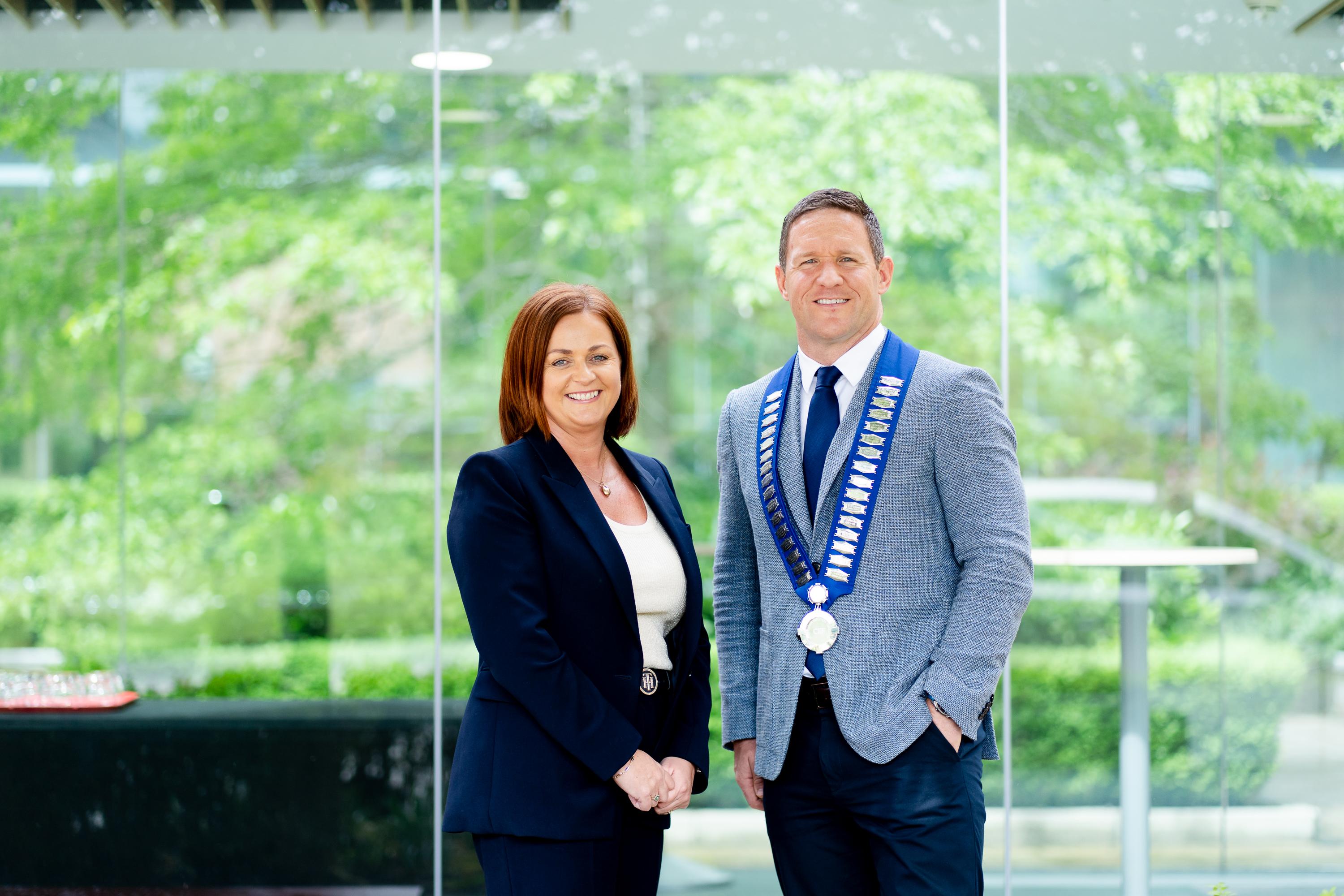
The event marked an important milestone for CEF, bringing together stakeholders from across Northern Ireland's construction and built environment sector to discuss the challenges and opportunities facing the industry while setting out a clear vision for the future through the launch of CEF's 2027 Northern Ireland Assembly Election Manifesto. The AGM also marked the beginning of a new leadership for CEF, with Gareth Loye (Mascott Construction) assuming the role of President and Janet Deane (Deane Public Works) as Vice President
Launch of the 2027 Election Manifesto
The manifesto calls on political parties and policymakers to prioritise delivery across several key areas critical to the future of construction and economic growth.
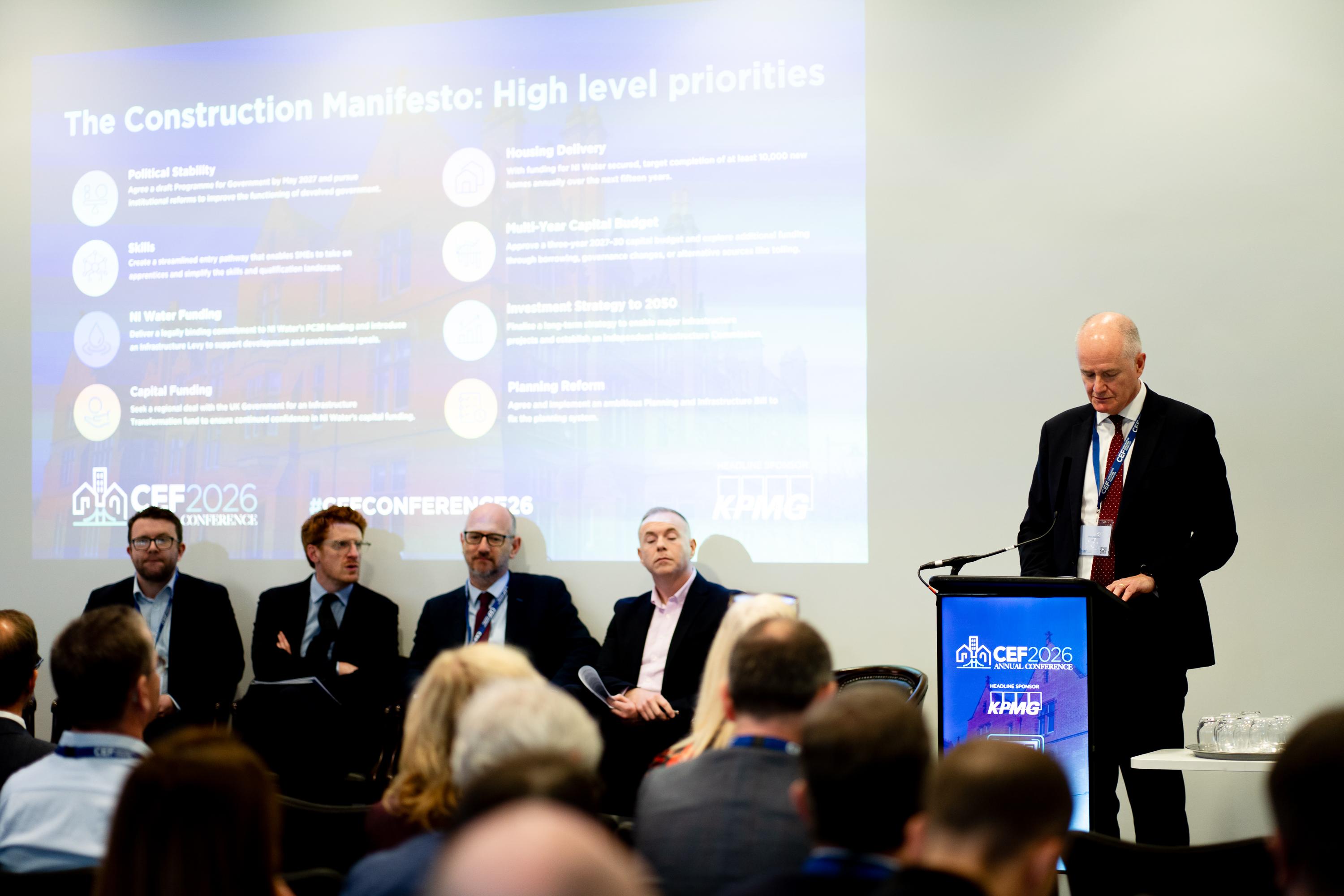
Among its headline priorities are the agreement of a draft Programme for Government by May 2027, the introduction of multi-year capital budgets, long-term infrastructure planning through an Investment Strategy to 2050, and major reform of the planning system.
The manifesto also calls for legally binding long-term funding commitments for Northern Ireland Water, the establishment of an Infrastructure Transformation Fund, action to support the delivery of 10,000 new homes annually, and reforms to create a more streamlined skills and apprenticeship system.
These priorities formed the basis of the conference's opening political discussion, which brought together representatives from across the political spectrum to debate the challenges facing Northern Ireland's infrastructure and housing ambitions.
Read More on this story
here.
New President
The AGM marked the beginning of a new chapter, with Gareth Loye, (Mascott Construction), formally assuming the role of CEF President for 2026/27 following his term as Vice President. Janet Deane, (Deane Public Works), elected as Vice President. Members paid tribute to outgoing President Bryan Vaughan of Vaughan Homes, who completed his two-year term after a period of significant leadership and engagement on behalf of the industry.
Read More on the AGM
here.
First Annual Conference
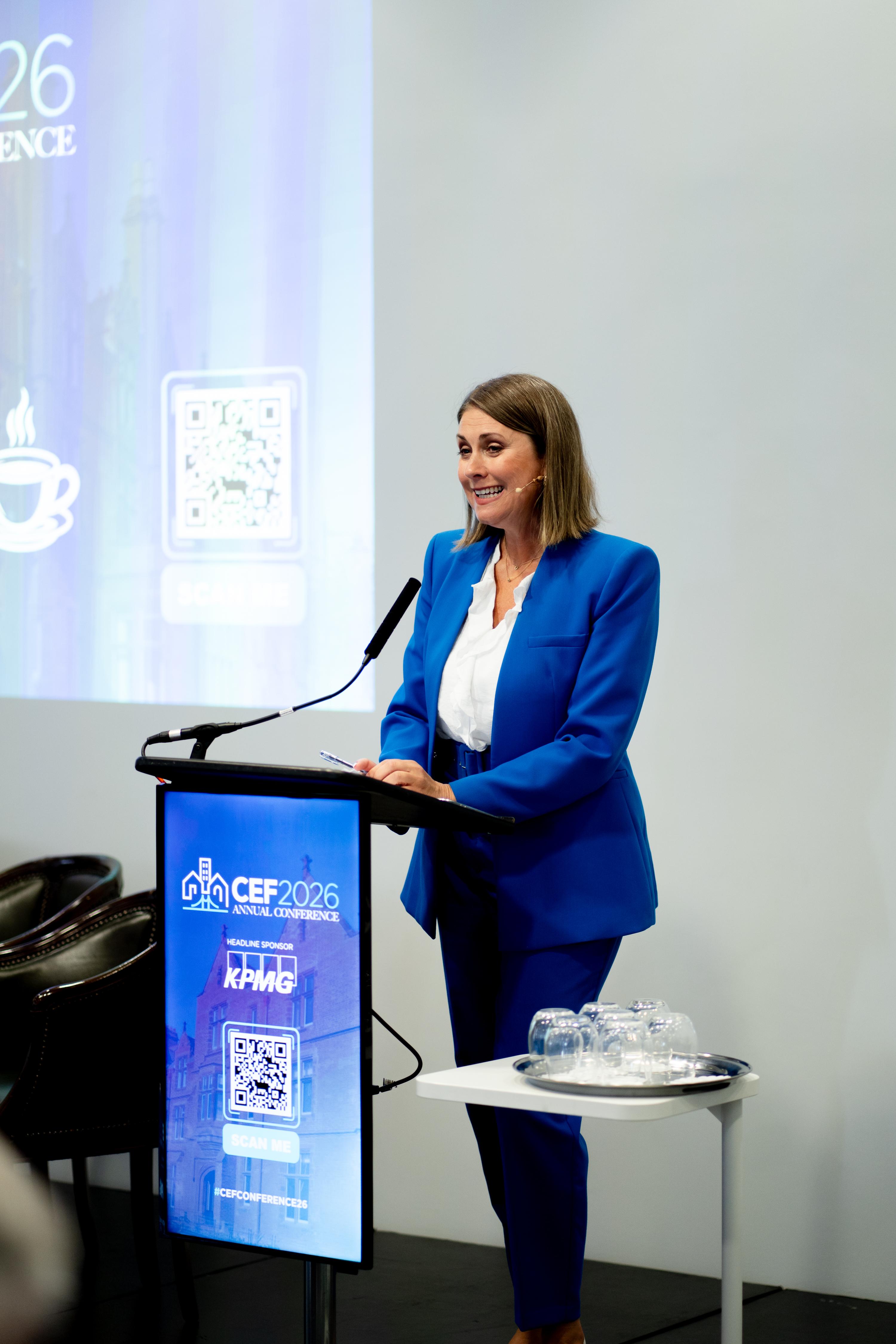
Following the AGM, delegates gathered for CEF's inaugural Annual Conference. Hosted by Sarah Travers, and in partnership with Headline Sponsor KPMG, over 200 delegates will hear from a range of speakers on subjects including skills, carbon reduction, and AI.
Opening the conference, CEF Chief Executive Mark Spence highlighted the increasingly important role construction plays in supporting economic development, public services and the transition to a more sustainable economy.
A central feature of the event was the launch of CEF's 2027 Northern Ireland Assembly Election Manifesto, entitled "Delivery, Not Delay", which sets out a practical programme of reforms and investment priorities designed to remove barriers to growth and enable the industry to deliver the homes, infrastructure and public services Northern Ireland needs.
Political Leaders Debate Industry Priorities
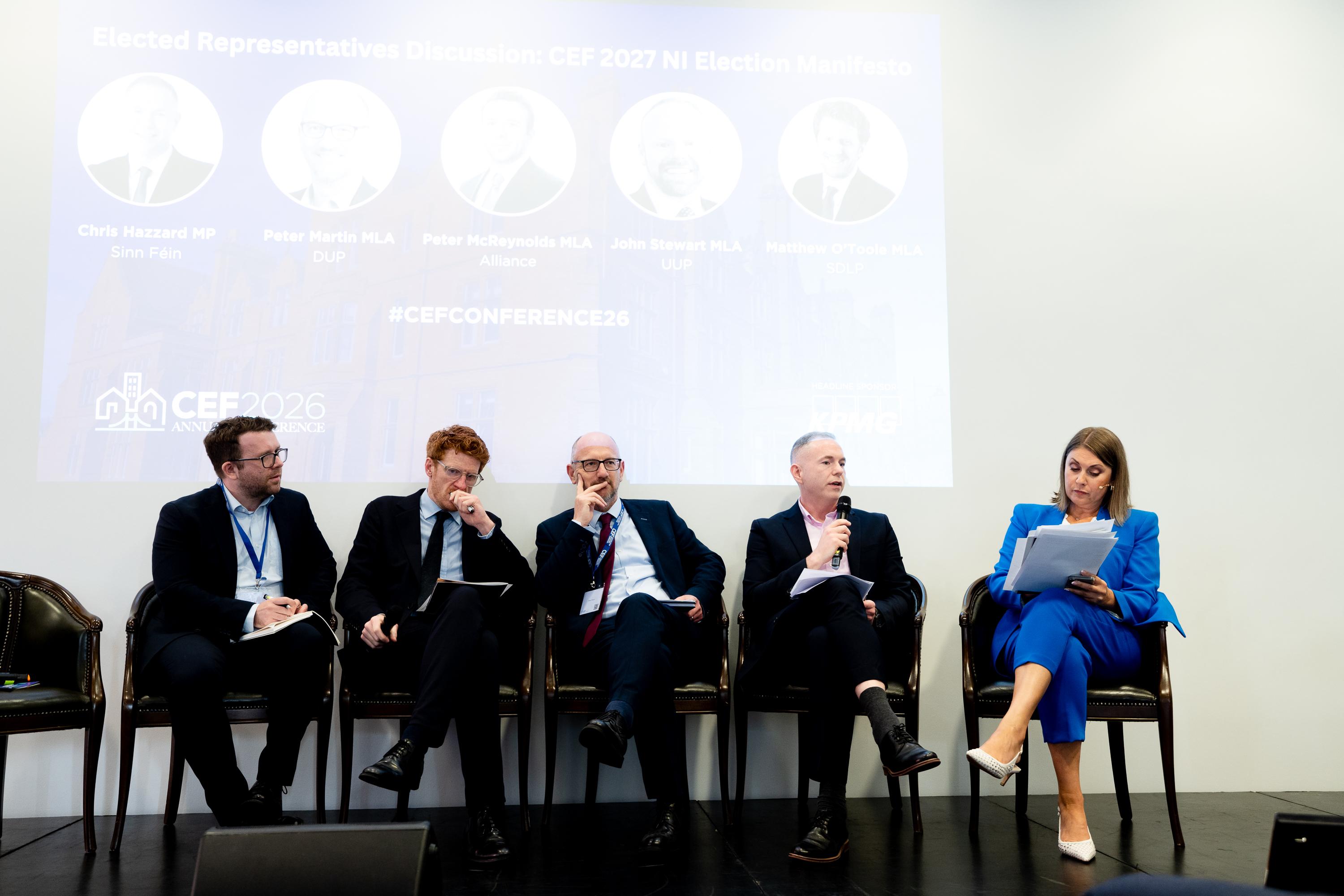
The first panel session featured Chris Hazzard MP, Peter Martin MLA, Peter McReynolds MLA and Matthew O'Toole MLA.
The discussion explored many of the issues highlighted in the manifesto, including political stability, planning reform, housing delivery, infrastructure investment and the funding challenges facing Northern Ireland Water.
Delegates heard differing perspectives on how government can create the conditions necessary to unlock investment and accelerate project delivery while ensuring long-term economic growth.
Net Zero and Sustainability in Focus
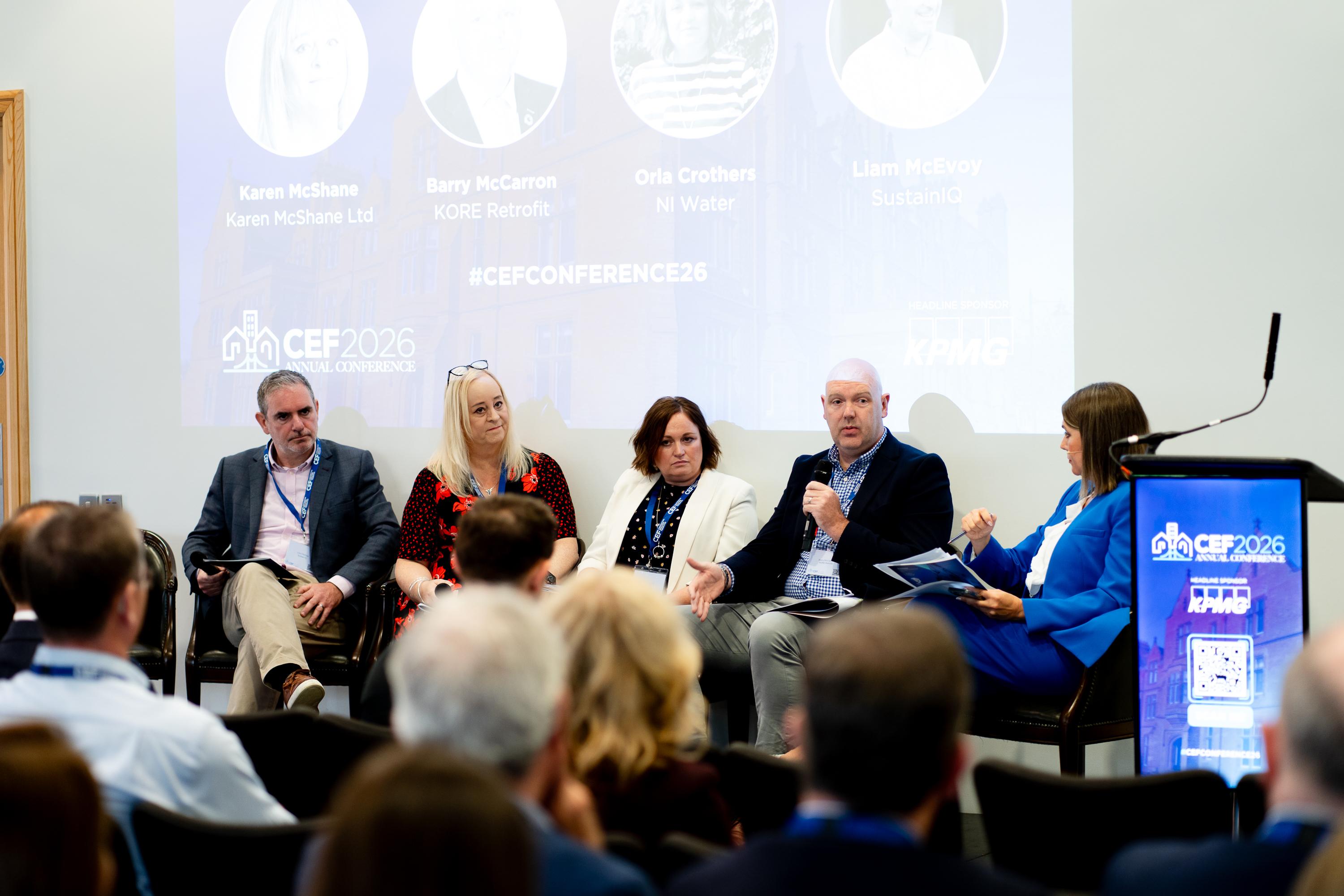
The second panel session examined Carbon Reduction and Net Zero in Construction, with contributions from Karen McShane (Karen McShane Ltd), Barry McCarron (KORE Retrofit), Orla Crothers (NI Water) and Liam McEvoy (SustainIQ). The discussion explored the construction sector's role in reducing carbon emissions, improving building performance and supporting climate resilience. Panellists highlighted both the opportunities and challenges associated with decarbonisation, including retrofit programmes, sustainable infrastructure investment and the increasing importance of environmental performance data across construction supply chains.
Building the Future Workforce
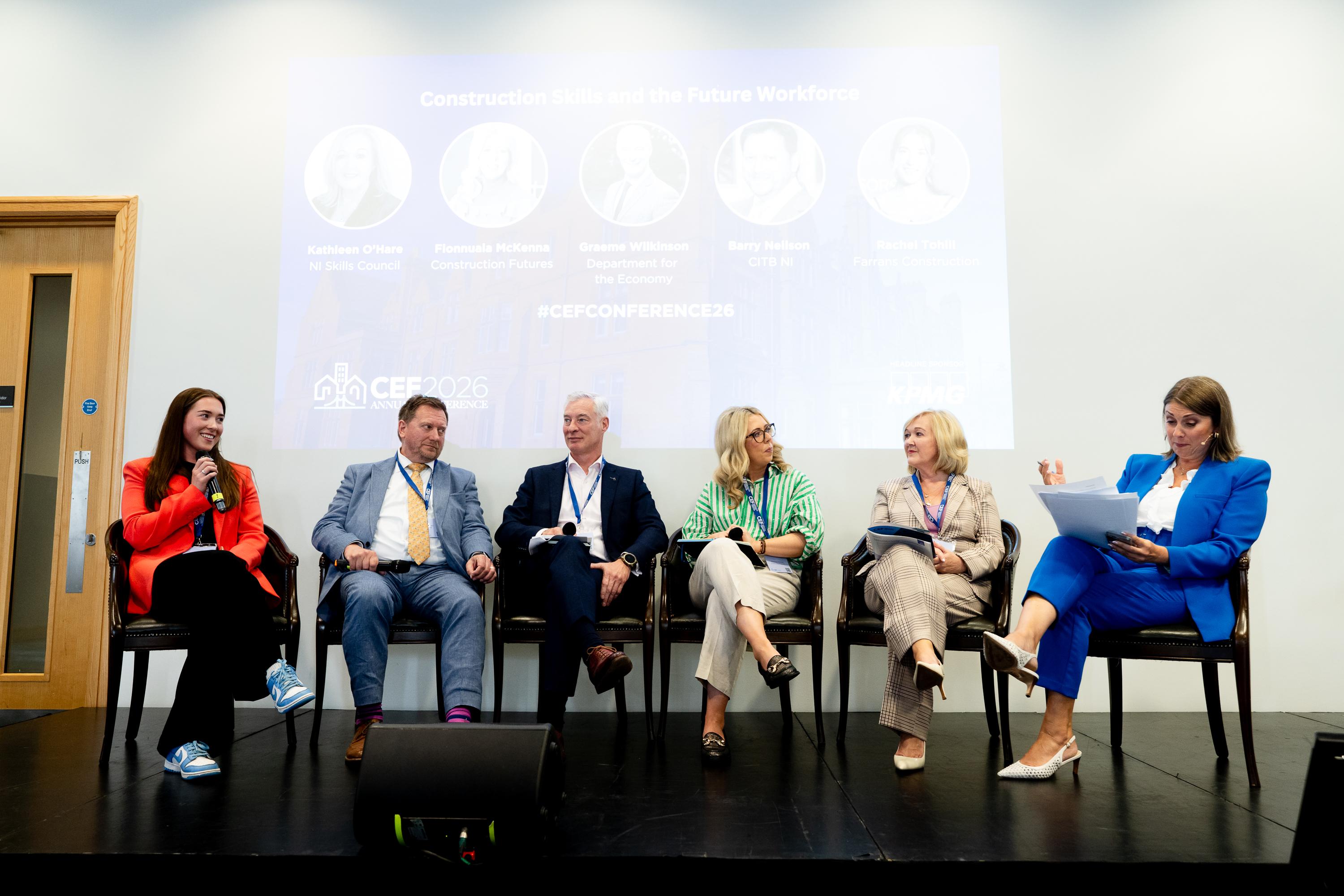
Skills and workforce development took centre stage during the conference's third panel session.
Kathleen O'Hare (NI Skills Council), Fionnuala McKenna (Construction Futures), Graeme Wilkinson (Department for the Economy), Barry Neilson (CITB NI) and Rachel Tohill (Farrans Construction) discussed the need to attract more people into construction careers, strengthen apprenticeship pathways and better align education and training provision with industry demand.
Panellists also highlighted the work being undertaken through Construction Futures and wider industry initiatives to improve awareness of construction careers and develop the next generation of skilled workers.
Exploring the Impact of AI
Delegates also heard a keynote address from internationally recognised AI expert Suzanne Hill, who explored the opportunities and challenges artificial intelligence presents for construction businesses.
Drawing on global examples, Suzanne outlined how AI technologies are already helping organisations improve productivity, decision-making and efficiency, while also highlighting the importance of preparing businesses and workforces for rapid technological change.
The conference concluded with a panel discussion on Digital and AI in Construction, featuring Suzanne Hill (AI for SMEs), Fiona Graham (Payapps), Peter Monaghan (Southern Regional College) and Brendan Rogers (Concara Digital Transformation).
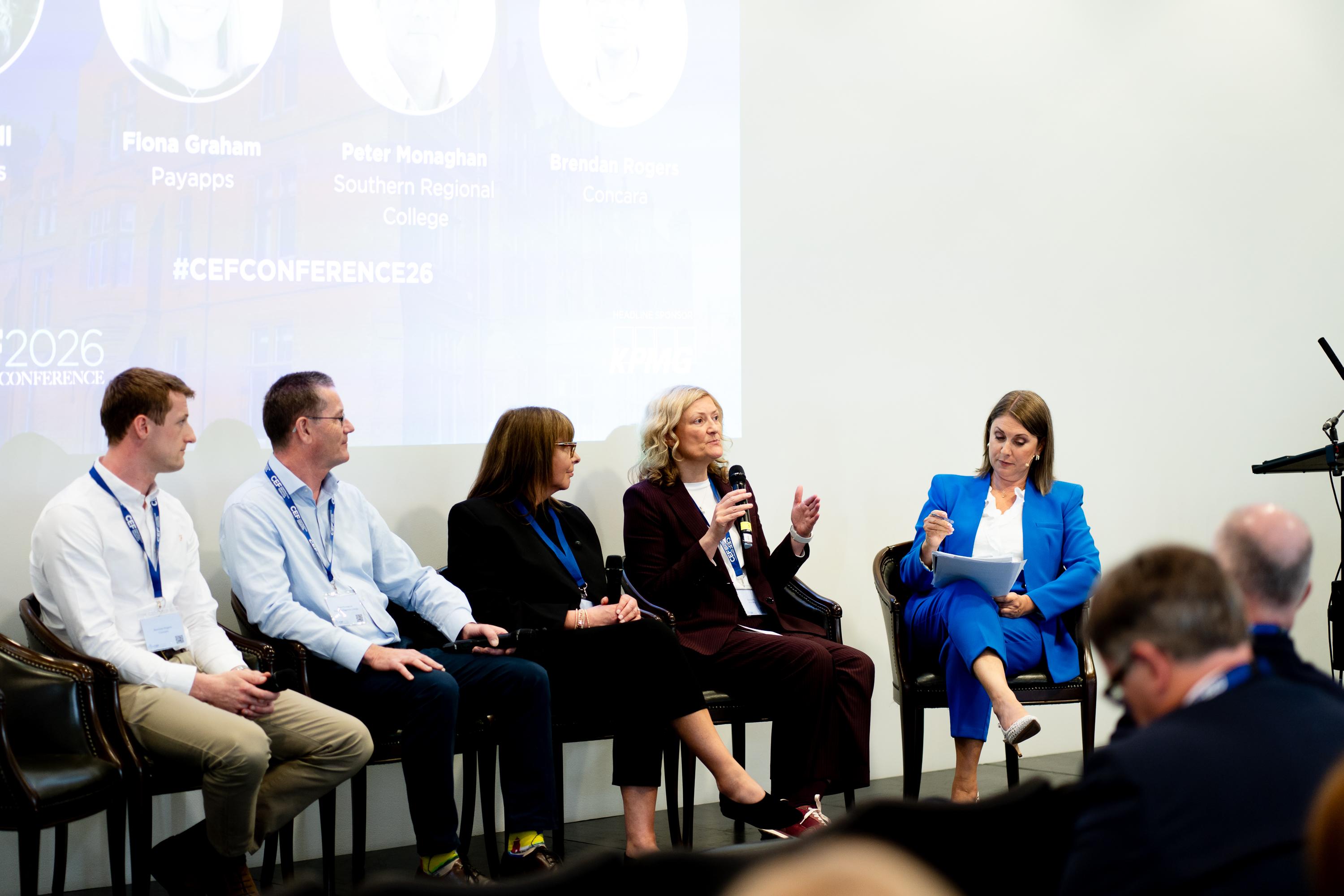
The session examined how digital technologies are transforming project delivery, payment processes, design, collaboration and business operations across the construction sector. Speakers discussed both the practical applications already being adopted and the future potential of AI and digital innovation to reshape the industry.
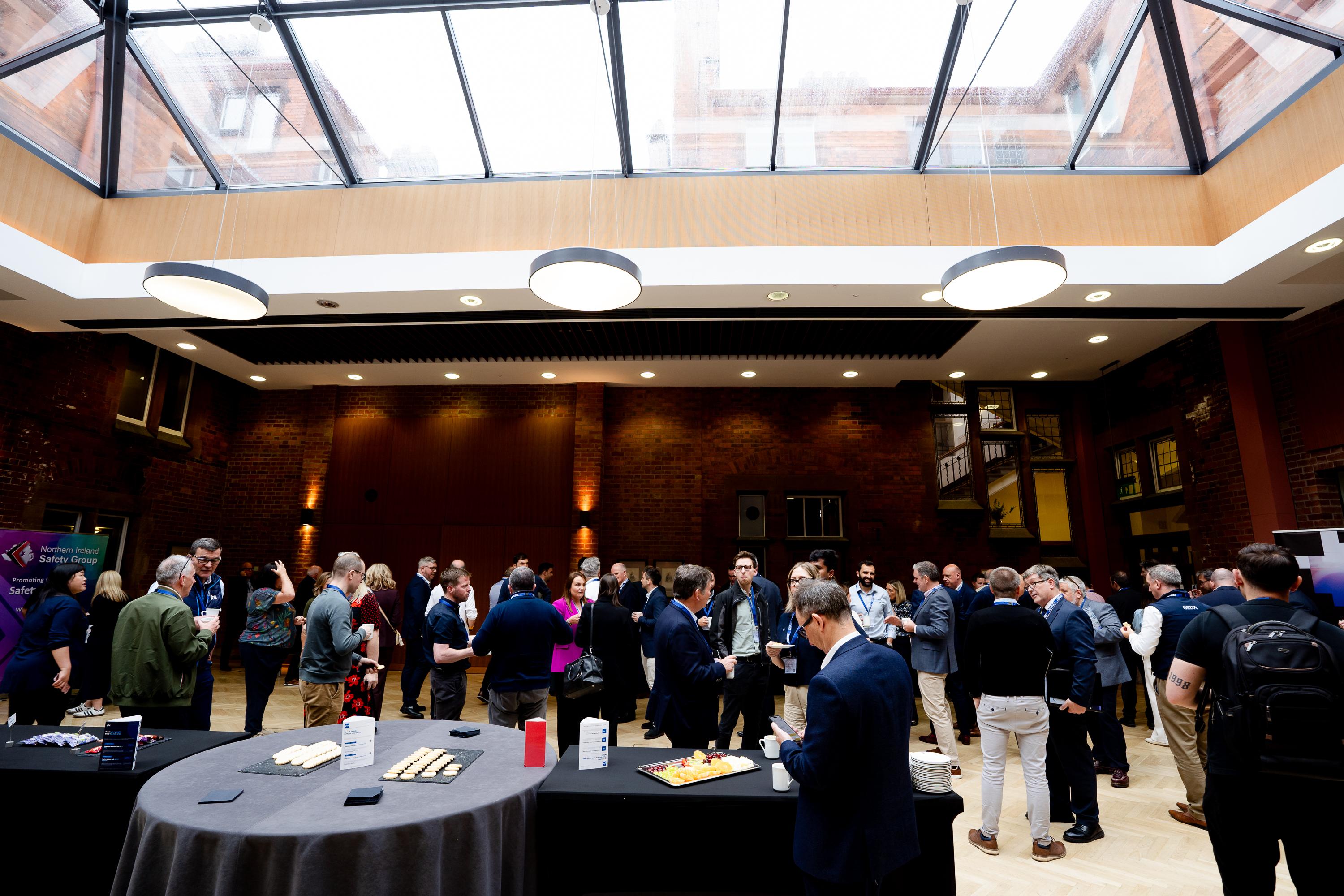
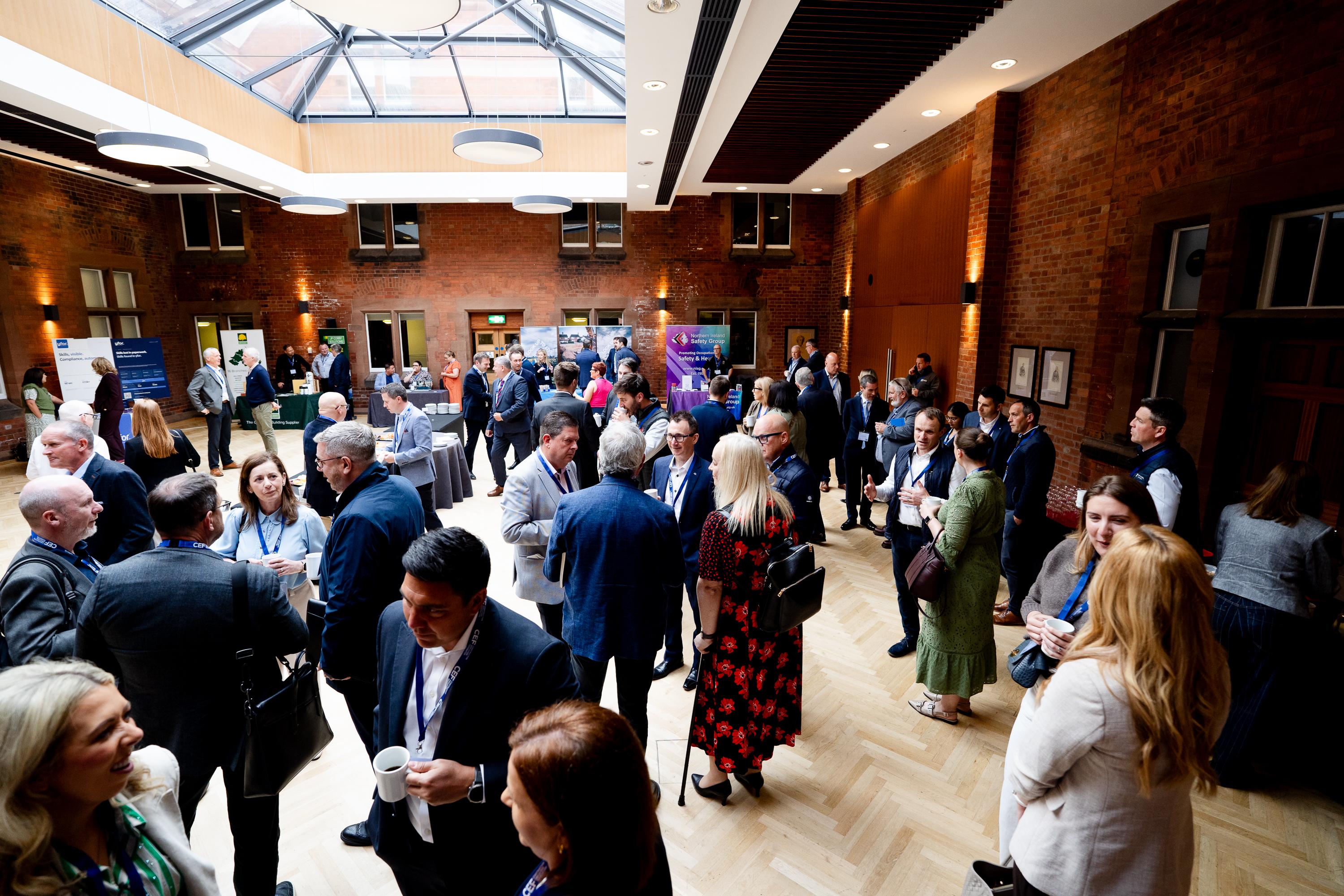
The event concluded with a networking lunch, providing delegates with an opportunity to continue discussions, build new connections and engage directly with exhibitors, sponsors and industry leaders.
Pictures from the Annual Conference are available
here.